
After having my second baby, I felt a profound sense of helplessness—as if I had completely “lost my brain.” My mind felt exhausted just trying to remember the smallest daily tasks. The long-term planning skills I used to be so proud of became a thing of the past. During that early postpartum phase, my “long-range vision” was limited to about 1 or 2 hours ahead. I even tried to master Sudoku to improve the brain function. It didn’t help. It was discouraging. I reached out to my mom friends to ask about this “brain fog.” One told me it never truly goes away; others shared their own “mommy brain” funny stories. I was almost ready to just accept it as my new reality.
One day, feeling like I was losing my sense of self, I decided to ask Gemini about my postnatal supplements. I had recently learned a new insight: Postnatal vitamins are often better suited for a mother’s needs than prenatal vitamins after giving birth. If you search Google, you’ll see popular options like Nature Made Postnatal or MegaFood Baby and Me. By comparing the labels, I discovered several key insights that helped me adjust my daily supplements and significantly improve my mental clarity.
If you search Google, you’ll see popular options like Nature Made Postnatal or MegaFood Baby and Me. By comparing the labels versus US/EU standards, I discovered several key insights that helped me adjust my daily supplements and significantly improve my mental clarity.
Postnatal Multivitamins: Often Incomplete By Medical Standards
When comparing two above major brands, the gaps become clear:
| Nutrient | MegaFood (2 Tabs) | Nature Made (1 Softgel) | US RDA/AI (Lactating) | EU/EFSA (Lactating) |
| Magnesium | 0 mg | 45 mg (11% DV) | 310–320 mg | 300 mg |
| Vitamin A | 675 mcg | 1299 mcg | 1300 mcg | 1100 mcg |
| Vitamin C | 100 mg | 120 mg | 120 mg | 155 mg |
| Vitamin D3 | 1000 IU | 2000 IU | 600 IU | 600 IU |
| Vitamin E | 19 mg | 19 mg | 19 mg | 15–19 mg |
| Folate (B9) | 500 mcg (Methyl) | 830 mcg (Folic Acid) | 500 mcg DFE | 500 mcg DFE |
| Vitamin B12 | 2.8 mcg (Methyl) | 5.8 mcg | 2.8 mcg | 4.0 mcg |
| Choline | 200 mg | 0 mg | 550 mg | 520 mg |
| Iron | 9 mg | 9 mg | 9 mg | 11 mg |
| Iodine | 290 mcg | 150 mcg | 290 mcg | 200 mcg |
| Zinc | 12 mg | 12 mg | 12 mg | 12.1–13.1 mg |
| Selenium | 70 mcg | 0 mg | 70 mcg | 85 mcg |
| Omega-3 (DHA) | 0 mg | 200 mg | 200–300 mg | 450 mg (EPA+DHA) |
The Choline Gap
Most popular postnatal vitamins (including these two) do not meet the daily Choline requirements set by the US or EU. Supplementing extra Choline is often necessary for “brain fog” support. It is a common frustration for breastfeeding moms to find that even the most expensive postnatal vitamins are missing Choline.
Based on current research and manufacturing standards, there are three primary reasons why this essential nutrient is oft:en left out:
1. The “Real Estate” Problem (Bulky Size): Choline is a bulky nutrient. Unlike Vitamin D or B12, which only require tiny amounts to be effective, the daily requirement for a breastfeeding mother is 550 mg. To put that into perspective, including just half of that amount in a single pill would make it too large to swallow comfortably.
2. Shelf-Life and Stability Issues: When Choline pulls in moisture, it can cause the entire multivitamin to become sticky, change color, or develop a fishy odor over time. n a mixed multivitamin, Choline can actually speed up the breakdown of other sensitive vitamins, like Vitamin A and Vitamin K. Manufacturers often exclude it to ensure the rest of the vitamins stay “active” until the expiration date.
3. Outdated Research & Standards: For a long time, it was assumed that our bodies made enough Choline on their own or that we got plenty from eggs and meat. Many legacy brands still follow older formulations that prioritize “the basics” like Folic Acid and Iron, leaving newer, research-backed nutrients like Choline as an afterthought.
How to fill the gap
Since most multis (like Nature Made) have 0mg and even “better” ones (like MegaFood) only have 200mg, you are left with a 350mg–550mg gap to fill each day.
- Dietary fix: One large egg yolk contains about 150 mg of Choline. Eating 2–3 eggs a day is the most natural way to bridge the gap.
- Supplement fix: A dedicated supplement is the most efficient way to get that high dose without the extra pills or calories.
The Magnesium Gap
Most multivitamins—including the two I am comparing—simply don’t have the “shelf space” to include a full dose of Magnesium because the molecule is too bulky. How does Magesnium help mommies?
- The Sleep Savior: Magnesium regulates neurotransmitters like GABA, which calms the nervous system. For a mom who is already sleep-deprived, Magnesium helps make the 2–3 hours of sleep she does get much higher in quality.
- The “Mom Brain” Clearer: While DHA builds the brain’s structure, Magnesium (specifically the L-Threonate form) supports synaptic plasticity. It helps with the “fog” by improving focus and short-term memory.
- Muscle & Stress Recovery: Labor and C-sections are physically traumatic. Magnesium is the primary mineral responsible for muscle relaxation and regulating cortisol (the stress hormone).
The DHA Gap
While the Nature Made Postnatal provides a baseline, and many “food-based” multis like MegaFood skip it entirely, the gap is often where the most significant benefits for “mom brain” and baby’s visual acuity are found.
Global recommendations vary, but the consensus is that a baseline multivitamin is rarely enough on its own.
If DHA is so important, why don’t manufacturers just put 500 mg in every pill?
- The “Fishy” Factor: High-dose fish oil is prone to oxidation, which creates that unpleasant fishy aftertaste or “burps.” Keeping the dose low in a multi helps maintain a neutral flavor.
- Size Constraints: 500 mg of DHA requires a large volume of oil. Adding this to a multivitamin would either make the pill impossible to swallow or require you to take 3–4 extra capsules daily.
- Shelf Stability: Omega-3s are fragile. They can degrade other vitamins in the bottle if not properly encapsulated, leading many brands to leave them out for a longer shelf life.
The gap matters because different types of Omega-3s do different jobs:
- DHA (Docosahexaenoic Acid): This is the “building block” for your baby’s brain and eyes. It makes up a massive portion of the gray matter in the brain and the retina.
- EPA (Eicosapentaenoic Acid): This is the “functional” fat that helps mothers with mood and focus. If you are specifically dealing with brain fog, a supplement with a higher EPA-to-DHA ratio is often more effective than just more DHA.
My Supplement Choices: The Magic Is Happening
I am super happy with my choices after researching and testing. I highly recommend this combination to you, mommies in 4th trimester!
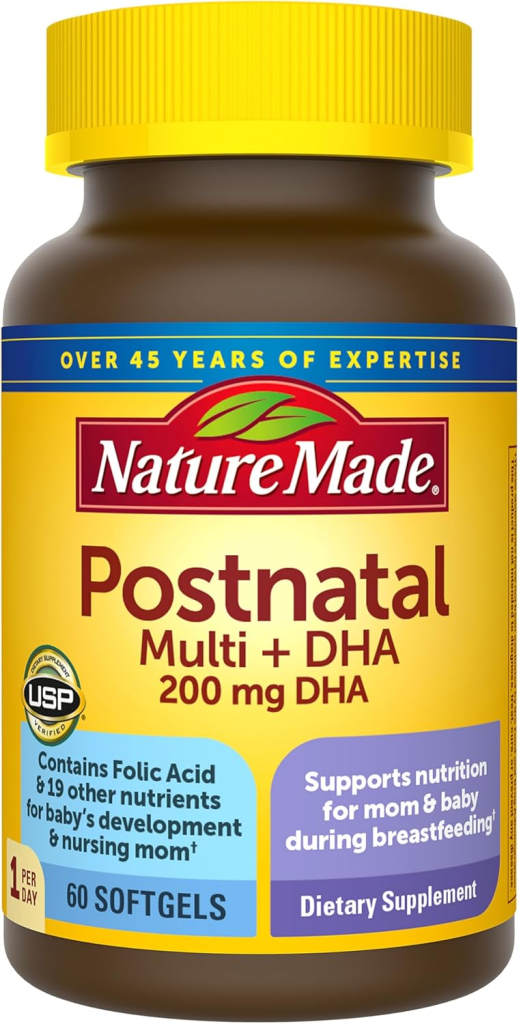
- Nature Made Postnatal (Product Link:https://amzn.to/4bHCwcO)
I was already familiar with Nature Made, so I chose Nature Made Postnatal. At the same time, I find the product a good value for money for daily usage. However, I realized this meant I was missing out on critical nutrients like Choline, Magnesium, and DHA.
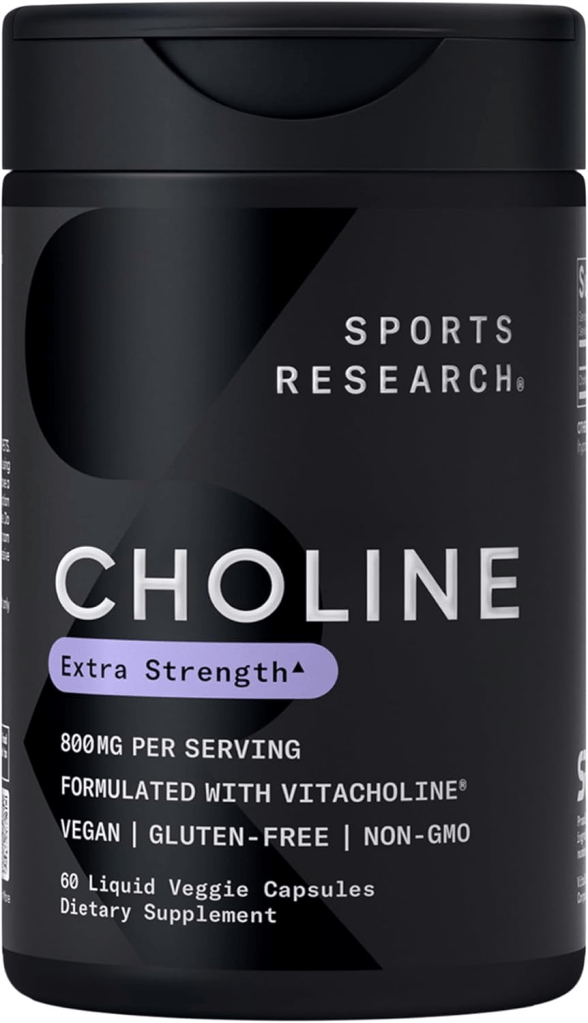
2. Sports Research® Extra Strength Choline 800 mg – Essential Nutrient Featuring VitaCholine® for Focus Support – Vegan Certified · Non-GMO · Gluten Free – 60 Liquid Capsules (Product Link: https://amzn.to/4rQJuT4)
This isn’t just generic choline. Sports Research uses VitaCholine®, which is a premium, clinically-researched form of Choline Bitartrate.
- Brain Focus: It is specifically studied for its ability to support cognitive function, focus, and attention—exactly what “mom brain” needs.
- Purity: It is a stable, high-purity salt that doesn’t have the “fishy” odor or stickiness often found in cheaper, non-branded choline supplements.
I actually don’t need to use the full dose to feel the effectiveness of the product 🙂
3. Sports Research Magtein Magnesium L-Threonate, 2000 mg, 135 Veggie Capsules (Product Link: https://amzn.to/3NHFiqt)
Sports Research Magtein® Magnesium L-Threonate is often highlighted as the “Gold Standard” for mental recovery. While other forms of magnesium focus on muscles or digestion, this specific formula was engineered to cross the blood-brain barrier to target cognitive function directly
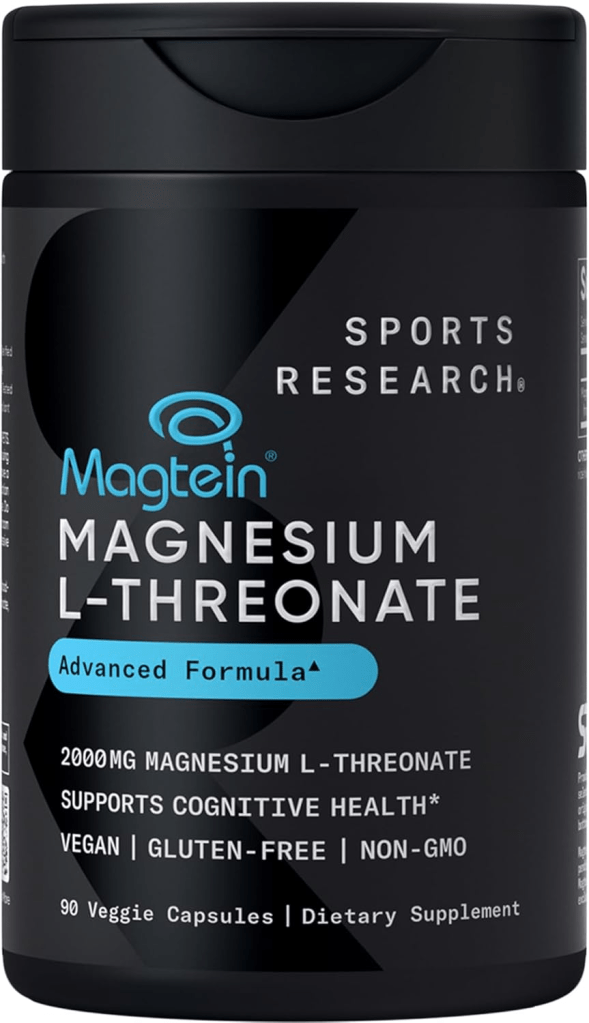
The product helps me to sleep so much deeper. Even though sometimes I have to wake several times during the night, I still feel so energized the next morning as if I had the full sleep. I wish I knew this one a long time ago!
By the way, Costco has this product 🙂
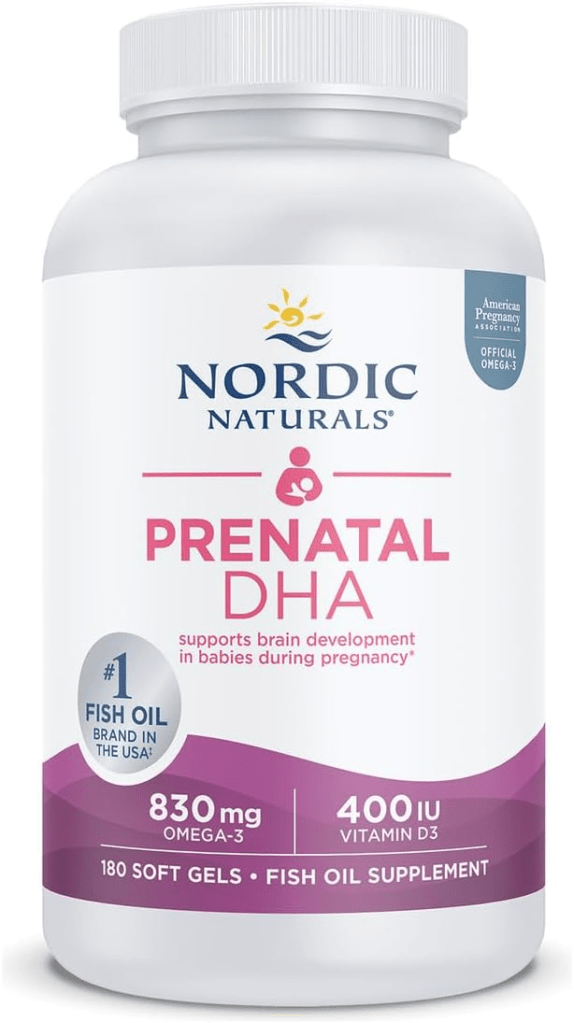
4. Nordic Naturals Prenatal DHA, Unflavored (Product Link: https://amzn.to/4bEkOqD)
Nordic Naturals Prenatal DHA is often considered a top-tier choice for expectant and breastfeeding mothers because it focuses on purity, absorption, and dosage. While many standard prenatal vitamins skip or under-dose Omega-3s, this supplement is specifically engineered to meet international safety and nutritional standards.
Note: This post contains affiliate links. As an Amazon Associate, I earn from qualifying purchases at no extra cost to you.





 Giggles & Getaways
Leave a comment